

My Burnout Story, Part 2: The Invisible Build-Up: Grief, Systemic Rage, and the Driveway Wake-Up Call
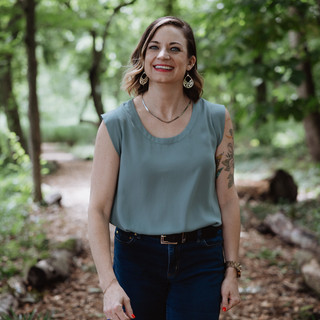
By: Sarah Donovan, LCPC, PMH-C | Perinatal Trauma Specialist | Certified EMDR Therapist & Consultant
The Collision of Milestone & Loss

We like to think breaking points happen in dramatic, singular flashes. Usually, though, they arrive as a slow accumulation of unbearable pressure. By 2018, I had reached Senior Mental Health Therapist status at Johns Hopkins Bayview. Out of pure passion and goodwill, I was supervising Master’s level counseling interns for zero financial compensation and running clinical consultation groups for the outpatient center. I was deeply committed to clinical consultation then, just as I am today.
At the same time, I was navigating matrescence, though I didn't yet have the word for it. It was the seismic, identity-shattering transformation of becoming a mother while working full-time in America, all while managing a punishing clinical load.
Between back-to-back sessions and endless documentation, I was ducking into dark corners to pump milk, try to eat, and catch my breath. I was surviving, barely. Then came the institutional gut-punch.
The head director of Bayview Community Psychiatry pulled me into his office, flanked by my two supervisors, to review an administrative report. My name had been flagged because I hadn't met my volume-of-service numbers over the preceding quarter—a timeframe that directly coincided with the three months following my maternity leave. This was despite the fact that I had been employed by Bayview for six years prior, had never once failed to meet my clinical volume requirements, and always went above and beyond.
Sitting in that chair, feeling raw, vulnerable and in the early stages of motherhood, I realized he had no idea I had given birth just ninety days prior to the window he was discussing. To make matters heavier, right as that postpartum window closed, my mother entered hospice. The system didn't care about the physical, emotional, and neurobiological transition I was undergoing, nor did it care about my dying mother. It only cared about billed units.
Little did anyone know, I was inhabiting multiple universes at once: holding space for clients and parenting my one-year-old by day, sitting by my mother’s bedside by night, and somewhere in between, trying to eat, sleep, and function like a normal human.
I didn't know it at the time, but right across the building in Adult Psychiatry, a now colleague and a Perinatal OCD specialist, Alexandra McNulty, LCSW-C, was also grieving the inevitable passing of her mother in the exact same building at the exact same time. We were both drowning in isolation, siloed by institutional walls and productivity metrics. What if we had known? What if we could have bumped into each other in the hallway, looked each other in the eye, and said, "Gosh, this shit sucks"? At least then we would have known we weren’t alone.
When my mother passed away in September 2019, the quiet sanctuary of my childhood vanished forever. Unbeknownst to anyone, I swallowed the pain, locked my grief in a vault, and relied on my high-octane ADHD engine to do what it had always done: distract, hustle, and dissociate to the millionth degree.
"Rage Droplets" and Systemic Exploitation
In an effort to find a more manageable pace, I transitioned to a private practice setting. But changing the venue didn't automatically change the patriarchal, capitalist defaults embedded in healthcare.
During my initial interview for the practice, I openly mentioned that my mother was currently in hospice. The clinic owner looked at me and asked point-blank, "Does that mean I should be worried about you leaving?"
I needed financial security, so I swallowed the horror of that question and replied, "No, I am committed, even if she dies." He wasn't asking how my central nervous system was holding up; he was assessing a risk to his bottom line. Unknowingly, that interaction telegraphed a silent message straight to my nervous system: grieving cannot interfere with your career.
The micro-invalidations, what I now call my "rage droplets," continued to build:
Postpartum Recalling: At just two months postpartum with my second baby, Maggie, I received an email from my clinic owner asking if I could "jump on an interview call" to vet a new clinician. By two and a half months, I was pushed back into seeing clients—completely against my body's timeline. I was stepping back into the fire while my body was still healing and my grief remained completely unaddressed.
The "Unreliable" Perinatal Client: My clinic owner routinely referred to perinatal and postpartum clients as "unreliable" due to cancellations or last-minute scheduling shifts. It left a visceral, burning rage in my chest. He couldn't understand this population because he had never been this population. My clinical flexibility—offering virtual pivots for nursing mothers or adapting for sick infants—wasn't "unreliable" business practice; it was compassionate, trauma-informed care. The clients weren't unreliable; the broader socio-economic systems supporting new mothers were completely broken.
The Pumping Interrogation: During the national formula shortage in 2021, I was nursing and pumping for my daughter—not entirely by choice, but because formula simply wasn't available on store shelves. I blocked off two short hours on my weekly schedule to pump, sanitize parts, store milk, and eat a single meal. During supervision, my boss stared at my schedule and demanded to know why I had so many "hour blocks." I looked him directly in the eye and stated the plain truth: "To eat and pump my BOOBS."
The Driveway Wake-Up Call
TL;DR
Systemic Demands (Volume / Revenue)
↓
Disregard for Bodily & Perinatal Cues
↓
Dissociation & Over-extension
↓
Near-Fatal Wake-Up Call
By June 2023, I was operating on pure autopilot. It was the day before our family’s first real vacation to the beaches of North Carolina. I had packed my schedule with a grueling, back-to-back week of client marathons to make up for the time off, ensuring every box was checked, every bill paid, and every administrative requirement met.
I didn't realize it, but I was completely dissociated from my physical body and emotions. I was living entirely in my head, disconnected from the ground beneath my feet.
I pulled into our driveway, exhausted and depleted. As I opened the door, I saw my young daughter running toward the car to greet me. I unbuckled and stepped out to scoop her into my arms when I noticed a strange movement out of the corner of my eye: the car was rolling.
In my brain-fogged, dissociated state, I had forgotten to put the car in park.
The vehicle was idling down the incline, heading straight toward us. Instinct took over—I grabbed my daughter, ducked, and rolled out of the way just as the car rolled past, crashing violently into a neighbor’s vehicle parked on the street.
The crash echoed through the neighborhood, but inside my chest, the silence was deafening.
It was a terrifying, near-fatal moment that shattered my defense mechanisms. My body was screaming at me: You are not present. You are running on fumes. You are going to get yourself or your children hurt if you keep living like this.
In the weeks that followed, the post-grief burnout symptoms became impossible to ignore:
Inability to Rest: I felt a deep, chronic panic during unstructured or low-lift days. I believed every spare second had to be productive.
Emotional Apathy: I stopped wanting to decorate for holidays or celebrate birthdays. The mental load felt insurmountable.
Decision Fatigue: Tiny everyday choices, like choosing what color to paint a room or deciding what to eat for dinner, felt overwhelming and trivial.
The Turning Point
I had spent my entire adult life operating under the false premise that exhaustion was the price of admission for success. I thought martyrdom was what made a "good" therapist, a "good" mother, and a "good" woman.
Standing in that driveway, watching the wreckage of a collision caused entirely by my own nervous system's complete detachment, I made a silent promise: I refuse to live on autopilot any longer.
I didn't just need a vacation. I needed a complete reclamation of my schedule, my humanity, and my life’s trajectory.
NEXT UP - STAY TUNED

Comments